Blackbuck National Park, located in Velavadar, Gujarat, is a unique grassland ecosystem that spreads across 34 sq. km. It is one of the few places in India dedicated to the preservation of the open plain and savannah-type habitat, which is now extremely rare in the country. The park is primarily covered by flat grasslands, dry scrub, and saline plains, supporting a specialized community of wildlife.
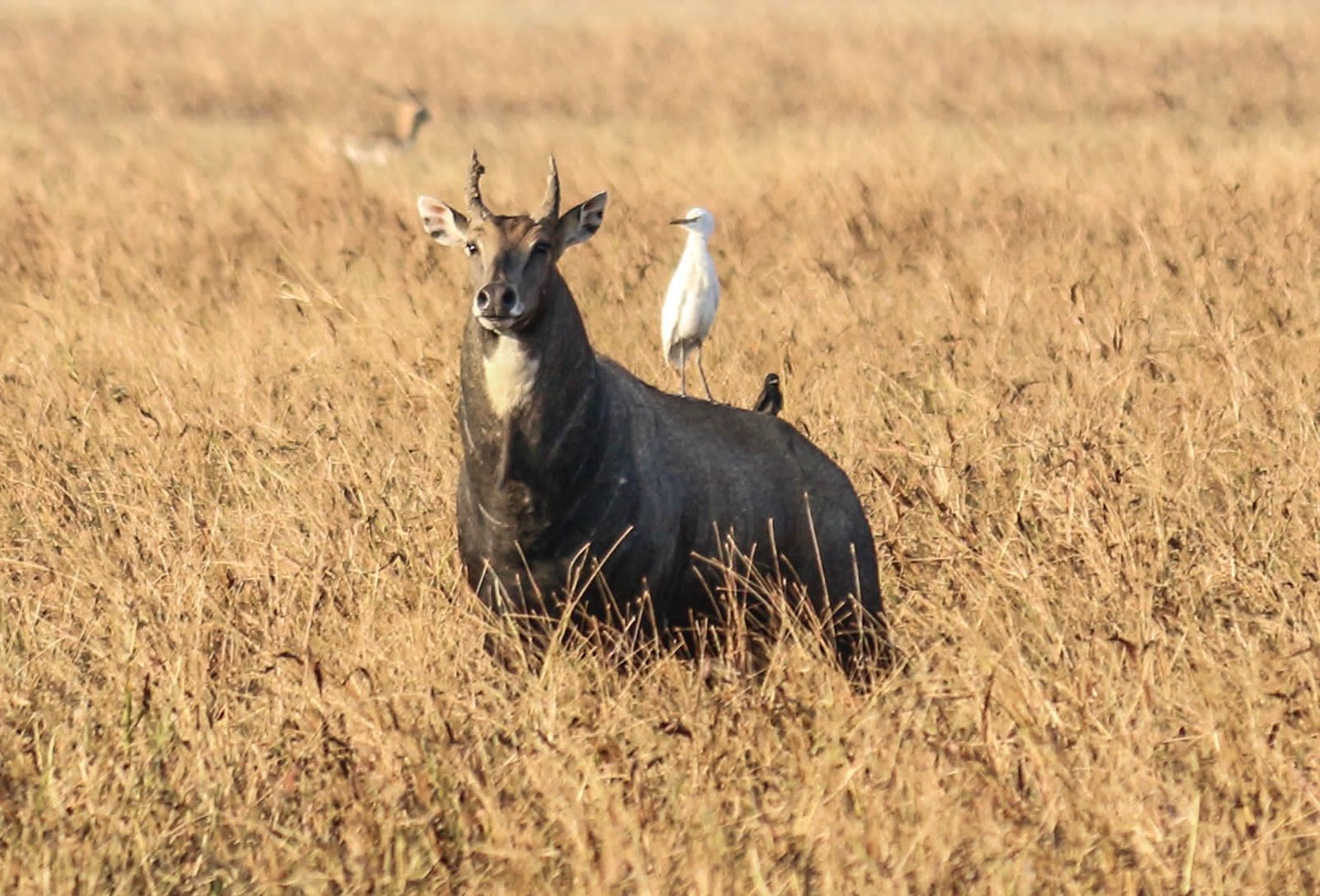
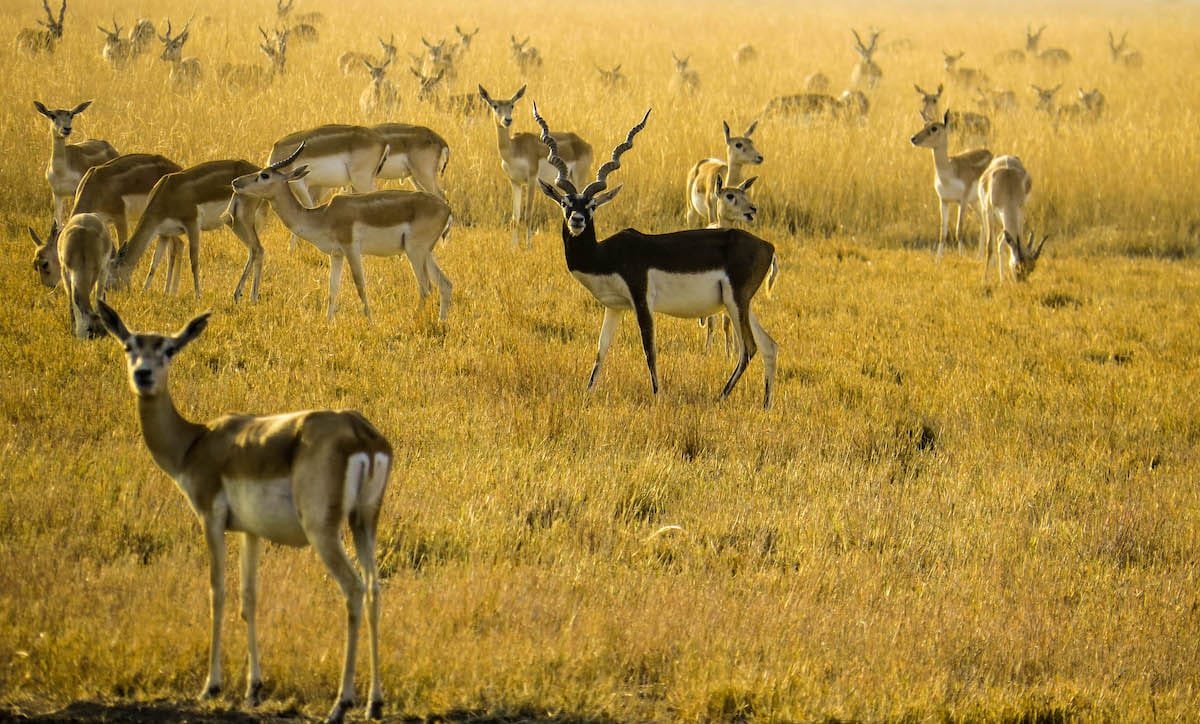
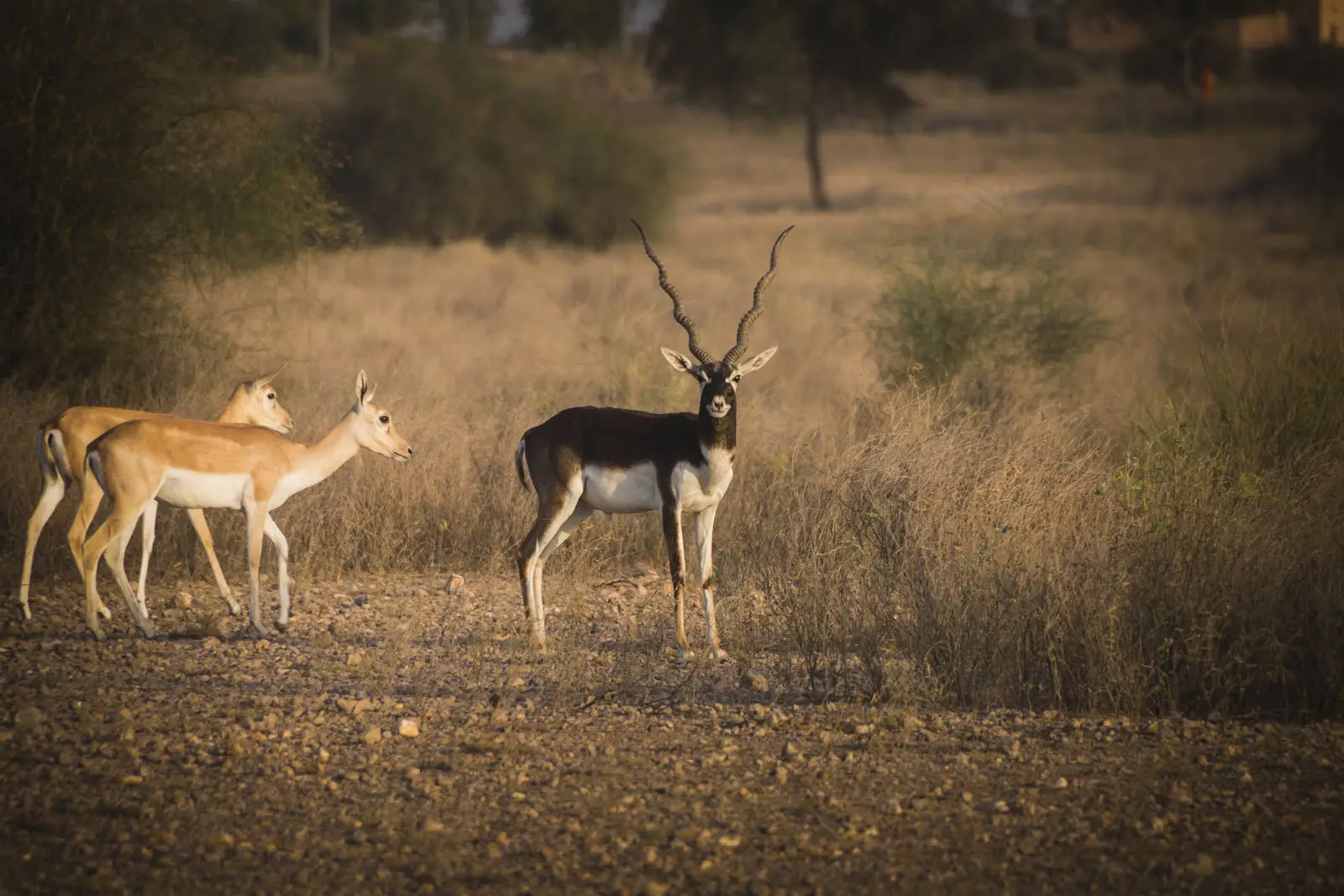
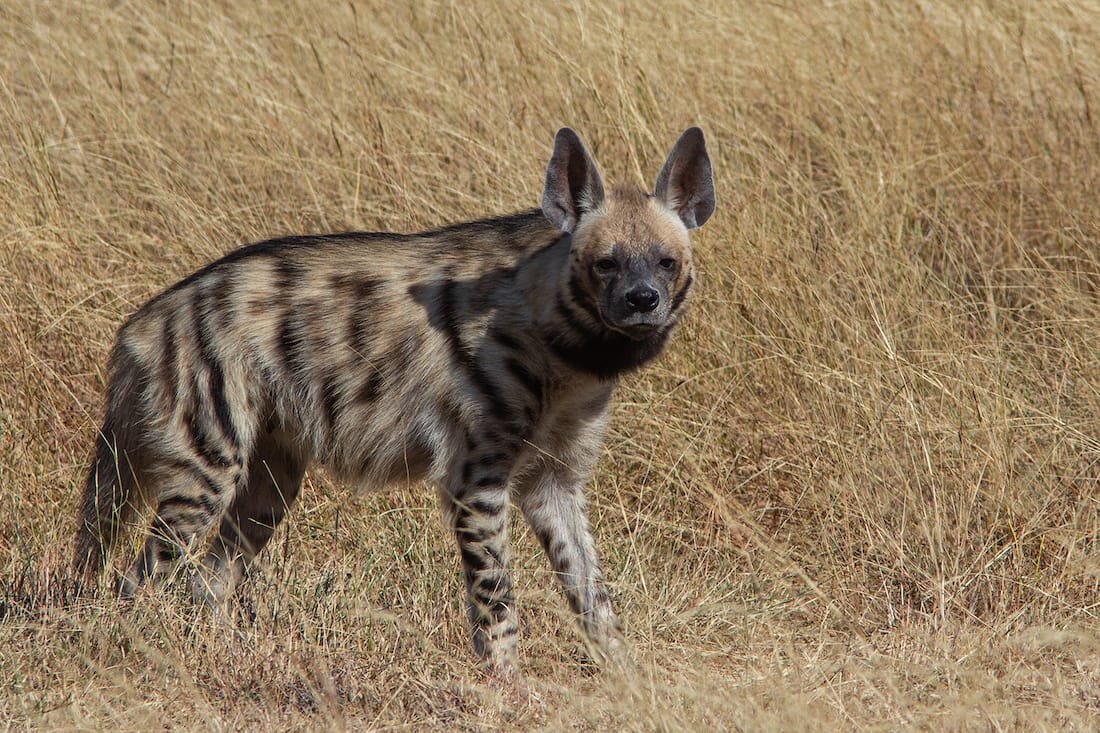
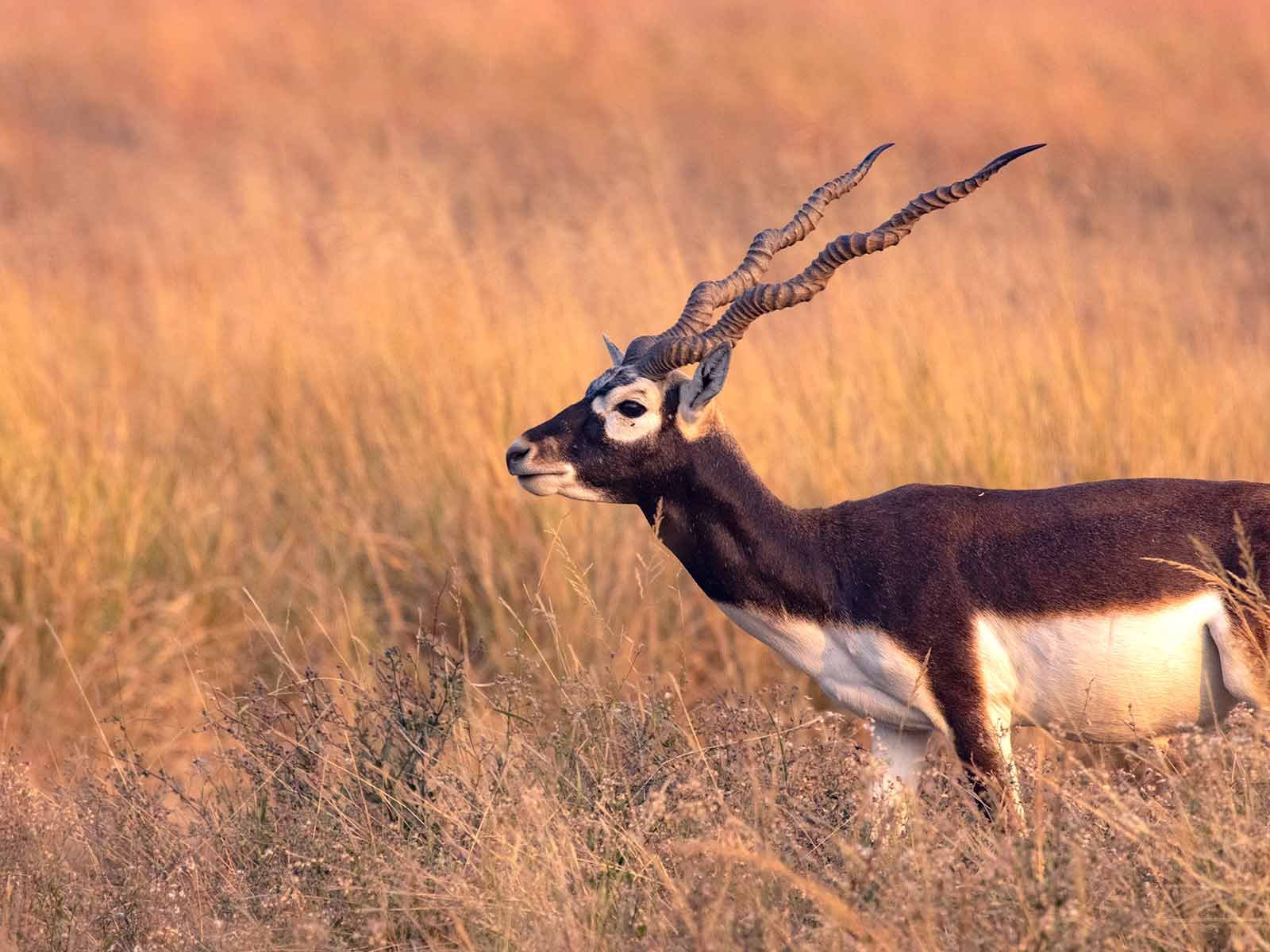
The reserve is world-famous for its population of blackbucks (Antilope cervicapra), a graceful antelope species that thrives in open plains. Apart from blackbucks, the park is home to nilgai, jackals, wolves, striped hyenas, and jungle cats, along with a variety of reptiles and smaller mammals. The grasslands provide the perfect environment for grazing species, which in turn sustain predators like wolves and hyenas.
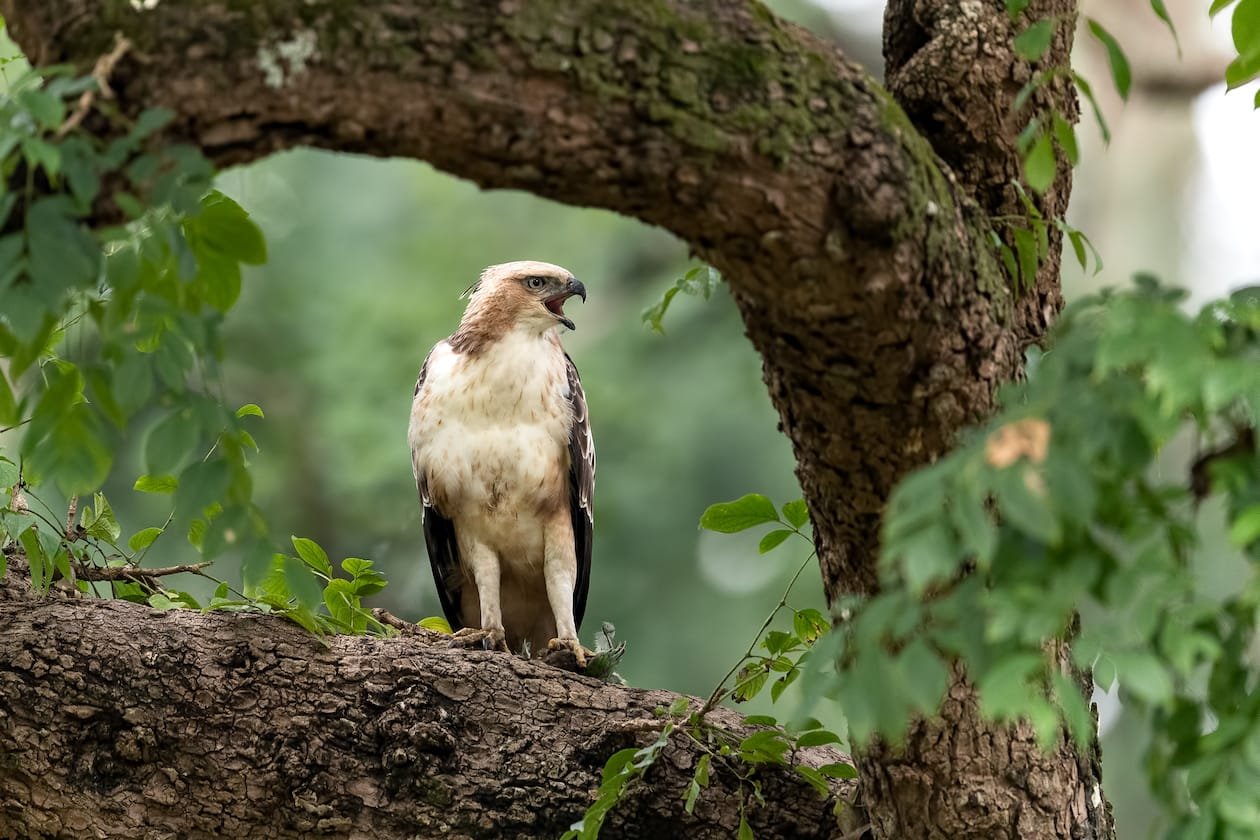
Bird diversity is equally remarkable, with more than 200 bird species recorded. Migratory birds such as the lesser florican (an endangered species), harriers, and flamingos visit during winter. Raptors like the pallid harrier and Montagu’s harrier make the park one of the world’s best roosting sites for harriers.
About Blackbuck National Park
Blackbuck National Park was established in 1976, mainly to protect the endangered blackbuck population and preserve the fragile grassland ecosystem. Situated near the Gulf of Khambhat, it is one of the few national parks in India where grassland conservation is the primary focus.
Historically, the area was the private grassland of the Maharaja of Bhavnagar, who used it as a hunting ground. After independence, it was converted into a protected area, and since then, blackbuck populations have thrived, making it a conservation success story.
Today, the park is a model for grassland and dry ecosystem conservation, which are often neglected in comparison to forests and wetlands. Its small size makes wildlife sightings frequent, offering visitors a chance to observe large herds of blackbuck and harriers against the backdrop of golden grasslands.